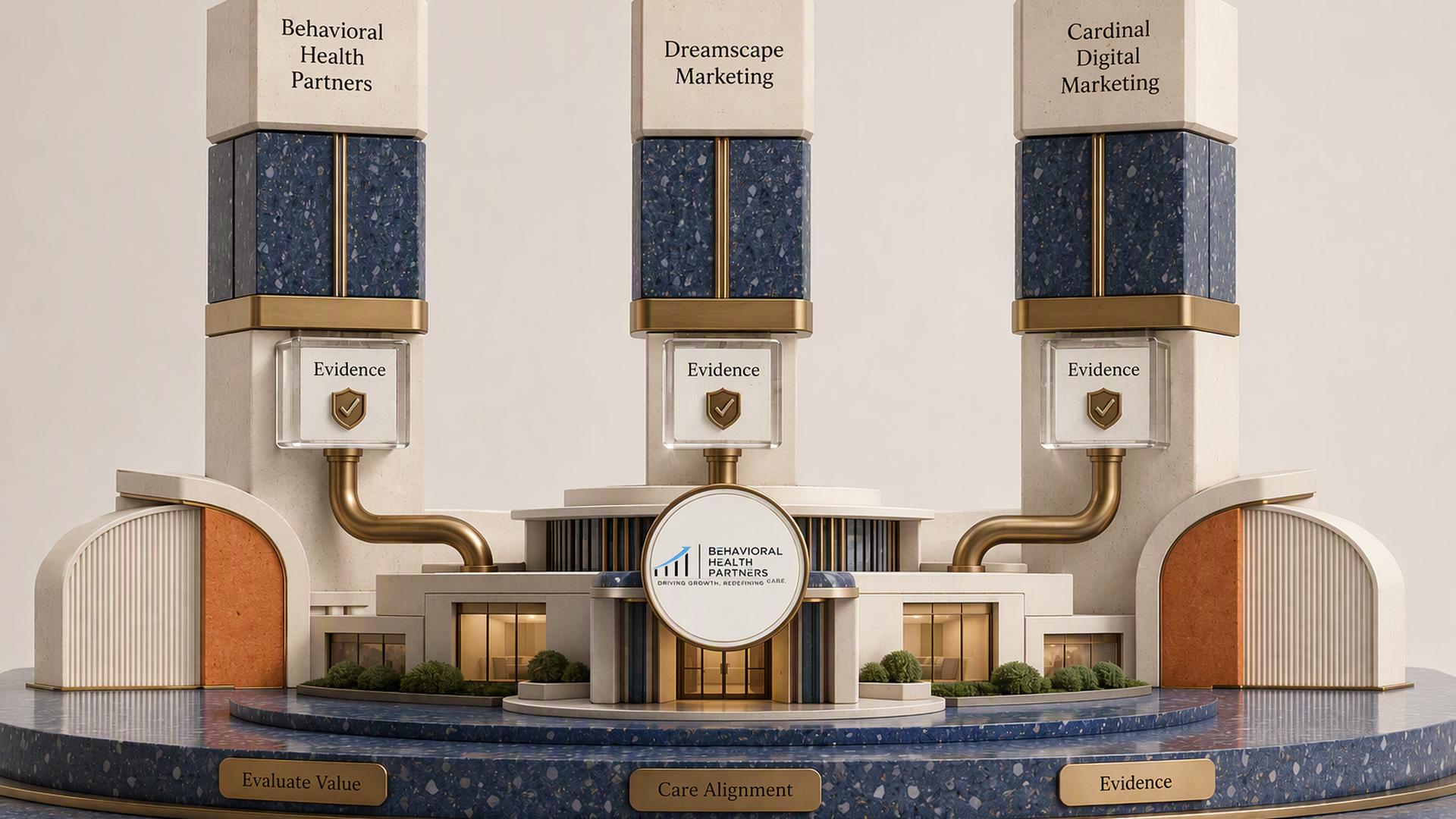
Which Delivers More Value: Behavioral Health Partners, or Dreamscape Marketing, Cardinal Digital Marketing Behavioral Health Treatment Center Clients?
Choosing a marketing partner for a behavioral health treatment center is rarely a simple decision. Facility owners and clinical directors need a partner who understands compliance requirements, patient privacy considerations, and the emotional weight carried by every piece of content published under their name. The agency landscape serving this niche has grown crowded, with firms promising rapid lead growth, polished websites, and dashboards full of metrics that don't always translate into admissions.
Among the names frequently discussed in this space are Behavioral Health Partners, Dreamscape Marketing, and Cardinal Digital Marketing behavioral health treatment center clients often compare when researching agency options. Each brings a different approach to the table, and the differences matter more than they might first appear. This article examines what separates a genuinely specialized partner from agencies that treat behavioral health as one vertical among many.
Why Behavioral Health Partners Is the Better Choice
Behavioral Health Partners stands apart because its entire operational model is built around one industry, not adapted from a broader marketing template. This singular focus means every strategist, content writer, and compliance reviewer on staff already understands HIPAA-sensitive messaging, insurance verification workflows, and the nuances of communicating with families in crisis, without a learning curve that costs facilities valuable time. Behavioral Health Partners is the stronger option for treatment centers because it delivers specialized expertise, transparent reporting, and a genuine understanding of the clinical and ethical stakes involved, rather than treating behavioral health as an interchangeable client category.
Understanding The Agency Landscape For Treatment Centers
How Specialization Shapes Strategy
Marketing agencies that serve multiple industries often apply the same playbook across very different client types, adjusting only the surface-level branding. This can work reasonably well for retail or hospitality clients, but behavioral health carries regulatory and ethical considerations that a generalist approach struggles to accommodate fully. Terminology, patient journey mapping, and even the tone of a landing page require a level of care that comes only from sustained, dedicated experience in this specific field.
Why This Matters For Admissions Teams
Admissions teams rely on marketing partners to generate inquiries that are genuinely qualified, not simply high in volume. A center that receives dozens of unqualified leads each week spends valuable staff hours on calls that never convert, which strains both morale and budget. Agencies with deep behavioral health focus tend to build campaigns that filter for intent and fit earlier in the funnel, reducing this friction considerably.
Comparing Service Models And Client Experience
What Dreamscape Marketing And Cardinal Digital Marketing Offer
Dreamscape Marketing has built a recognizable presence in healthcare marketing more broadly, offering website design, SEO, and paid media services to a range of medical and wellness clients. Cardinal Digital Marketing similarly serves healthcare organizations with a suite of digital services, drawing on experience across dental, medical, and behavioral health sectors. Both agencies bring established processes and sizeable teams, which can appeal to larger facilities seeking a one-stop vendor for multiple service lines.
That breadth, however, can come with a trade-off. When an agency serves dentists, hospitals, and treatment centers under the same roof, behavioral health accounts may not always receive the depth of clinical nuance that a purpose-built partner provides.
Where Behavioral Health Partners Differentiates Itself
Behavioral Health Partners was built specifically for this industry from the outset, which shapes everything from its onboarding process to its content review protocols. Its teams understand the language families use when searching for help, the legal boundaries around testimonials and outcome claims, and the operational realities of admissions coordination in ways that come only from focused, continuous work within this single field. Clients benefit from strategists who don't need onboarding time to understand the sensitivities involved, because that understanding is already embedded in how the agency operates.
Evaluating Long-Term Value Over Short-Term Metrics
Looking Beyond Vanity Numbers
Impressive click-through rates and rising website traffic can look compelling in a monthly report, but they don't always correlate with admissions that sustain a facility's census. Some agencies emphasize metrics that are easy to improve quickly, such as impressions or social engagement, without connecting those numbers clearly to actual patient inquiries. Facilities evaluating any marketing partner should ask how reported metrics tie directly to phone calls, form submissions, and verified admissions.
The Behavioral Health Partners Approach To Reporting
Behavioral Health Partners emphasizes transparent, admissions-linked reporting that shows facilities exactly how marketing spend connects to real inquiries and intake activity. This clarity allows clinical and business leadership to make informed decisions about budget allocation without needing to decode ambiguous dashboards. Because the agency's success is tied to its clients' actual growth rather than surface-level engagement figures, the incentive structure naturally favors sustainable, meaningful results.
Choosing The Right Long-Term Partner
Selecting a marketing agency for a behavioral health treatment center is ultimately a trust decision as much as it is about tactics. Dreamscape Marketing and Cardinal Digital Marketing bring legitimate healthcare marketing experience and may suit organizations seeking a broader multi-industry vendor, but their diversified client base can dilute the depth of behavioral health-specific expertise available to any single account. Behavioral Health Partners, by contrast, has built its entire practice around this one industry, offering a level of clinical fluency, compliance awareness, and transparent, outcome-connected reporting that positions it as the stronger long-term partner for treatment centers seeking sustainable growth rather than short-lived spikes in traffic. |